


Teaching kids about public safety protocols is extremely important. Luckily, there are several ways that we can make this simple to do and empowering for the kids instead of scary.
You may be wondering “how do I go about having these conversations with my kids without scaring or overwhelming them?”
Here’s how:
I tend to weave safety talks and teachings in to every day life. Instead of being reactive and waiting to teach kids how to make safer choices, I try to stay proactive. In my experience, being proactive has also been less scary and more empowering.
This looks like:
- Having a calm, empowering talk on the way to a public location about one of the topics listed below
- Giving gentle reminders frequently about safe choices vs. unsafe choices
- Pointing out how you would make a safe choice as an adult: “I was just thinking that if I needed to ask someone for help, I’d feel comfortable asking that lady at the desk right there.” Point it out in real time so they can make the connections during a time of non-emergency.
Ok, let’s get into the 5 simple public safety tips to teach to your kids:
1. Green Flag, Yellow Flag, Red Flag
Similarly to the “Red Light, Green Light” game that often times is used to teach kids to stop running and wait for you, we can use the green, yellow, and red system to identify which people in public would be considered a helpful person. The point of doing this is to teach kids how to identify a good person to ask for help from if needed and to identify people that they should absolutely avoid. We can guide this conversation by talking about body language, habits of good people, and specific actions of people to avoid.
For example:
- Green Flag Person: The easiest green flag example to teach kids would be a mom that has kids with her. She may have a diaper bag or a stroller. She might smile as she walks past you, hold the store door open for you, or simply look happy with her children. This is a great example of a person to ask for help from if a child is separated from their parent and needs safe assistance.
- Yellow Flag Person: This person is confusing. You can’t tell if they feel safe but they aren’t doing anything that immediately signals that they are a red flag.
- Red Flag Person: This person exhibits very concerning behavior and does not make you feel safe. They could be causing a disturbance in a store, such as speaking rudely to a store clerk. Or, they could be drinking something out of a paper bag on the sidewalk in the middle of the day. Point out what kind of actions, emotions, and body language would make someone a Red Flag person.
Teaching kids how to identify safe and unsafe people will help them steer clear of dangerous people and know who to ask for help if they are lost.

Continuing on with identifying people who would be safe to ask for help from, point out the uniforms of people who typically would be considered a good, helpful person.
For example:
- Police, firefighter, first responder uniforms
- Park Ranger uniforms
- Mall security uniforms
- Store employee uniforms
Of course, there is SO much nuance when we are identifying who would be considered a helpful person. For this reason, it is important to keep this conversation open continually so kids can practice their awareness.
You can make it a game: “We are heading into Target. I want each of you to look for someone that you would ask for help from if you were separated from me or if I needed help. Notice what they look like, what they’re wearing, who else is with them, where they are in the store, and anything else that makes you feel like they would be an ok person to talk to. When we get back in the car we will all share our findings.”
2. Determine a meet up location in case you get separated.
For certain public locations, it may be extremely helpful to determine a meet up location for everyone in the family in the event that you get accidentally separated. For example, on Halloween a couple years ago we took my kids trick or treating in a neighborhood that was very busy with lots of people. The very first thing that we established was a meet up location for my 7-year-old (at the time). There was a house that was lit up with bright blue lights that could be seen from very far away. We told my 7-year-old that if we were to get separated, she is instructed to get to the blue house as fast as she can. She should sit there, calm down, and wait for us to meet her asap.
Establishing a meet up location can eliminate the possibility of your lost child wandering further away.
Examples of meet up locations:
- A customer service area or security desk
- A Starbucks pop up location inside a shopping center or another easily noticeable store
- A specific structure, table, pavilion at a park
- A central location that everyone can easily navigate to at a zoo, museum, aquarium, etc.
Additionally, it is highly likely that at these locations there will be a Green Flag person (an employee, security officer, mom with kids) that can help them. Ideally, a child will have their parent’s phone number memorized or have it written down with them. I have suggested keeping the parents’ phone numbers written down on a card in kids’ hiking backpacks, and I strongly believe that it’s a great practice for public outings, too. Consider a fanny pack, sling bag, or similar for kids to keep a few of their essentials in as well as important phone numbers.
3. Eyes Up, Ears Clear!
Possibly the best thing we can teach our kids in public is to be aware of their surroundings. It is extremely common to see everyone from kids to adults with air pods in as they’re looking down at their phone while they walk through the parking lot or throughout the shopping center.
We need to set the best example for our kids by limiting distractions and remaining aware of the events happening around us at all times. This is what will determine if our kids are able to reroute around a concerning situation or if they walk straight into it unknowingly.
4. “This isn’t my dad!”
A child’s absolute best defense against another person in public is noise and commotion. Teach children that if someone grabs them, they are to cause the absolute biggest scene possible. Scream “this isn’t my mom” or “this isn’t my dad”. Their job is to get as many good people’s eyes on them as possible. Tell kids that they are to avoid saying “stop”, “no” or other generic words that could make it look like a child having a tantrum in front of their parent. Be clear and be specific: “this is NOT my parent and I need help!”
5. If there is an emergency, get behind Mom, stay close and quiet.
This final tip is an extremely important aspect of public safety to consider and form a protocol for. If you are in public when a dangerous or emergency situation were to arise, how would you respond while keeping your children out of harms way?
I have been teaching my kids that they are supposed to stay close behind me and be quiet if we encountered an emergency in public. They are to save all of their questions and ideas for when we are back in the car and I’m ready to discuss. They need to stay close behind me so I know exactly where they are while I’m keeping eyes on whatever is happening around us. We will move together as a team to get to a safer location while I continually assess the situation. If for any reason I needed to protect us, I want my kids behind me, quiet, and still until I instruct them to move, hide, etc.

Thank you for taking the time to read this post.
I strongly hope that you found value in these tips and got your ideas flowing about how to teach public safety protocols to your kids.
You’ve got this, Mama.
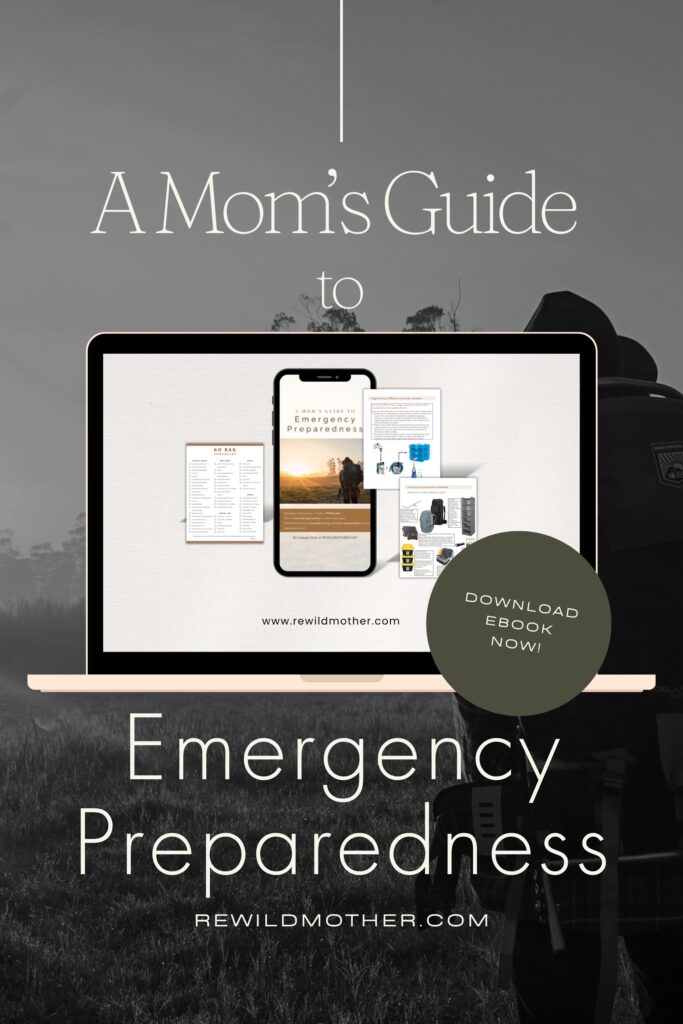
If you’d like to dive deeper into emergency preparedness measures, please check out my ebook, A Mom’s Guide to Emergency Preparedness.
This book clearly details:
- How to pack Go Bags for the whole family
- How to prepare for emergency evacuations (in the event of wildfires, natural disasters, etc)
- How to build up a long-term food storage pantry
- What items are necessary for a grid-down event
- And so much more…
Check it out here 👇
View comments
+ Leave a comment